Whether you’re settling a loved one’s estate, helping a parent downsize into a smaller place or a care facility, or clearing a property before a sale, an estate cleanout carries a different weight than a typical remodel or garage purge. It’s often happening during probate, on a deadline set by a closing date or a lease, and alongside grief or a family that doesn’t always agree on what stays and what goes. There’s no way to make that simple, but there is a way to make it manageable. Here’s a checklist we walk Tallahassee families through when they call our estate cleanout line.
Start With What Doesn’t Go in Any Dumpster
Before anything else gets sorted, pull out the items that need a different path entirely: legal documents (wills, deeds, financial records — anything an executor or probate attorney might need), jewelry and small valuables, photographs and family keepsakes, and firearms, which have their own transfer rules and shouldn’t be handled casually. Take this pass slowly and involve whoever in the family has authority to make these calls. Everything else on the property becomes a much easier decision once these are set aside.
Sort Into Three Piles, Not Two
Most cleanouts go faster with three categories instead of the usual keep-or-toss: keep (family items, anything with sentimental or real financial value), donate (furniture, housewares, and clothing in usable condition — Tallahassee has several donation centers happy to take good furniture, and it’s often the most respectful way to let go of things a loved one cared for), and dispose (worn furniture, damaged items, and the general accumulation every long-occupied home collects). Sorting this way before a dumpster ever arrives means the container fills with what genuinely needs to go, not with decisions still waiting to be made.
Sizing an Estate Cleanout
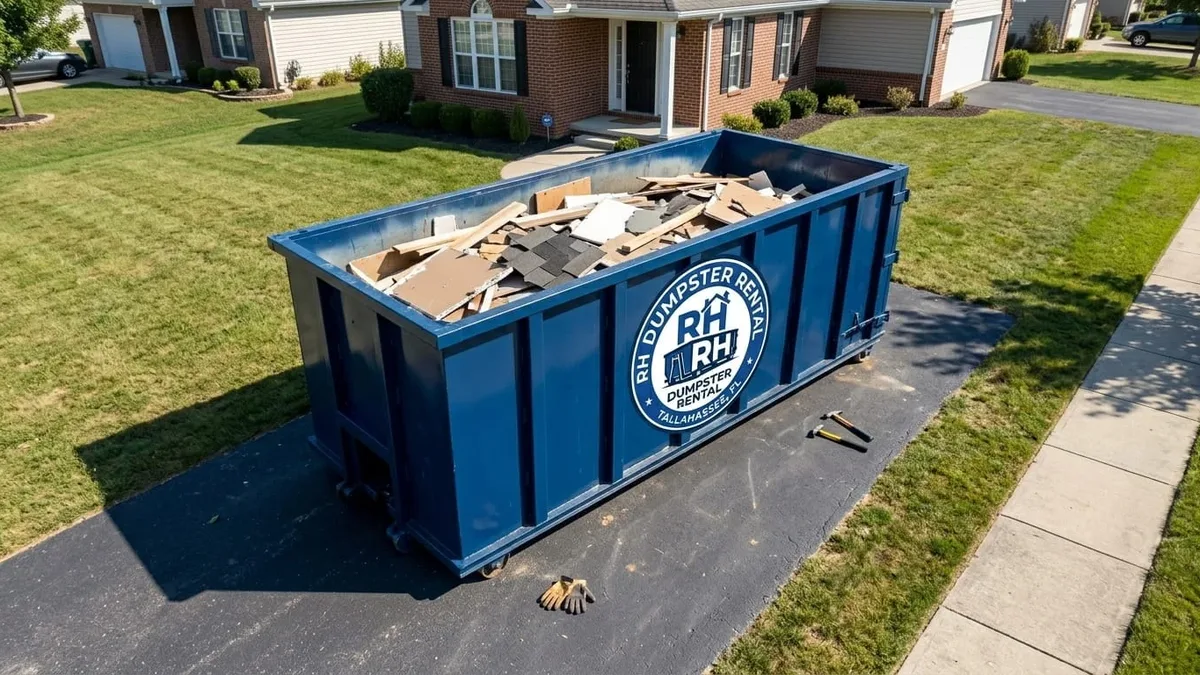
Estate cleanouts vary more in size than almost any other job we quote, because “how much stuff” depends entirely on how long someone lived in the home and how much they kept. As a general guide: a single downsizing move or a smaller apartment often fits a 15-yard dumpster. A full single-family home — furniture, appliances, garage contents, years of belongings — more commonly needs a 20-yard, and larger homes or properties with a detached garage or shed full of decades of accumulation sometimes call for a 30-yard. If you’re not sure, describe the home’s size and roughly how full it is when you call, and we’ll recommend a size rather than have you guess. Our dumpster sizing guide covers all five sizes in more detail.
A Realistic Timeline
Estate cleanouts rarely happen in a single weekend, and it’s worth planning for that instead of fighting it. A common pattern: a first pass to pull out documents, valuables, and anything going to family members, spread across a few days or weeks depending on how spread out the family is; a donation run once furniture and housewares are set aside; and then a dumpster rental toward the end for what’s left, timed so the container isn’t sitting empty while decisions are still being made or filling up before the sorting is even done. If the home is heading toward a sale or the end of a lease, work backward from that date and build in a buffer — these things reliably take longer than expected, especially with a house full of a life’s worth of belongings.
Working With Family and an Executor
When more than one family member has a say, disagreements about what to keep are normal, not a sign anything’s going wrong. A few things that help: settle who has final say (often the executor, if the estate is in probate) before sorting begins, so decisions don’t stall; give family members who live out of town a chance to flag items before the dumpster is scheduled, even if that means a slower timeline; and don’t rush the sentimental items — the furniture and boxes will still be there next week, but a photo album tossed in a hurry doesn’t come back. If the estate is in probate, it’s also worth checking with the estate’s attorney before disposing of anything that might have documentary or financial significance, even if it looks like ordinary paperwork at a glance.
What We Handle, Quietly
We’ve done enough estate cleanouts across Tallahassee and Leon County to know the job calls for a different tone than a construction tear-out. We deliver, we stay out of the way while your family sorts at its own pace, and we pick up when you’re ready — no pressure to rush a decision just because a container is sitting in the driveway. If the home has a narrower or older driveway, common in some of Tallahassee’s established neighborhoods, mention that when you call and we’ll confirm the right size and placement. And if the property also needs old appliances or large furniture hauled that you’d rather not load yourself, our junk removal service can handle that alongside the dumpster.
When You’re Ready
There’s no wrong pace for an estate cleanout, and we’d rather you take the time the process deserves than rush it to fit a container’s schedule. When you’ve sorted through what needs sorting and you’re ready for a dumpster, call RH Dumpster Rental Tallahassee at (850) 900-8684 and tell us roughly what’s left and where the property is. We’ll recommend a size, confirm delivery and pickup timing around your schedule, and handle the rest.