Tallahassee is inland enough — roughly 20 to 25 miles from the coast — that storm surge and coastal flooding aren’t the primary risk here the way they are for Gulf-front communities. What we do get, and get hard, is wind. Downed trees, damaged roofs, and widespread power outages are the real story of a hurricane in the Capital City, and nothing illustrates that better than what happened in September 2016.
Hurricane Hermine: What Actually Happened Here
Hurricane Hermine made landfall in the Florida Big Bend in September 2016 as the first hurricane to directly strike Tallahassee since Hurricane Kate in 1985 — a 31-year gap that had let the city grow considerably more tree canopy and infrastructure in the meantime, with predictable results once real hurricane-force wind moved through. About 80% of the city lost power, Florida State University included. Countywide, 57% of Leon County homes lost power, and at the peak roughly 145,000 homes and businesses across the county were without electricity. Six days later, 3,685 customers were still in the dark. On the structural side, Leon County recorded 45 structures destroyed, 187 severely damaged, and 259 with minor damage, adding up to roughly $10.3 million in losses. It remains the clearest local example of what a direct hurricane hit does to a heavily wooded, inland city like Tallahassee — not surge, but trees, roofs, and power lines.
Why Tree Canopy Is Tallahassee’s Real Storm Risk
Tallahassee’s tree cover — the same canopy that makes neighborhoods and the region’s famous Canopy Roads so distinctive — is also exactly what turns a hurricane into a debris event here rather than a flood event. Mature oaks and pines come down onto roofs, driveways, and power lines in high wind, and the cleanup that follows is overwhelmingly about limbs, downed trunks, damaged fencing, and roofing material rather than water-damaged contents. If you’re planning for storm season in Leon County, plan for that kind of debris specifically.
Before the Storm: A Few Practical Steps
Hurricane season in Florida runs June through November, with the historical peak in August and September — Hermine hit in early September. A few things worth doing ahead of a forecast storm rather than after one has already hit: trim dead or overhanging limbs near the house and driveway if you have the ability to do so safely; secure or store loose yard items (furniture, planters, anything wind can turn into a projectile); and if you know a storm is tracking toward the region and you’re likely to need cleanup afterward, get on a dumpster rental schedule before the storm, not after. Demand for containers spikes hard in the days right after a hurricane, and booking ahead of the rush — even a tentative hold — puts you closer to the front of the line.
After the Storm: Safety Before Cleanup
Once a storm has passed, resist the urge to start hauling debris immediately. Downed power lines are the single biggest post-storm hazard — treat every line on the ground as live until the utility confirms otherwise, and keep clear of any tree or limb that’s tangled with one. Give trees and large limbs a real look before touching them; wind-damaged trees can be under tension and shift unpredictably even when they look stable. And if a tree has come down onto a structure or power line, that’s a job for professionals with the right equipment, not a DIY chainsaw project. Once the immediate hazards are cleared by the right people, that’s when a dumpster earns its keep — getting downed limbs, damaged fencing, and ruined roofing off the property and out of the way.
Sizing for Storm Cleanup
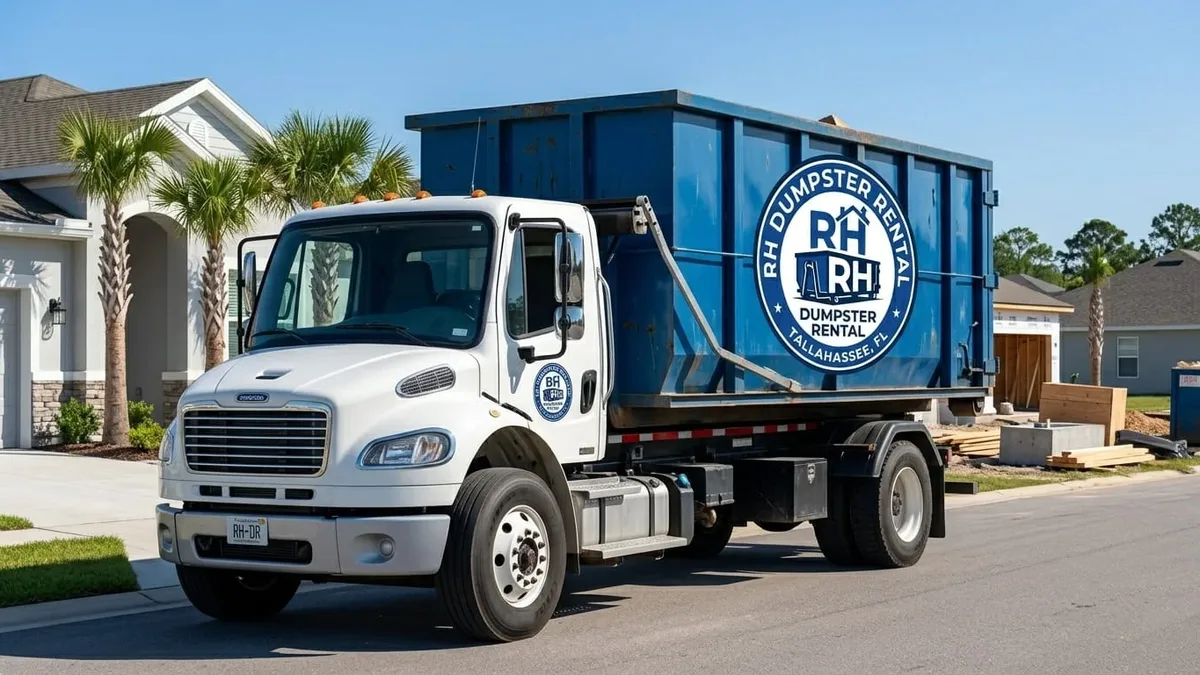
Storm debris tends to run bulky — limbs, branches, and yard waste take up real volume without necessarily weighing as much as, say, concrete or shingles. A 20-yard dumpster covers a typical single-property cleanup after a wind event; larger properties or households combining storm debris with roofing damage often step up to a 30-yard. Our yard waste dumpster rental and roofing dumpster rental pages cover those two categories specifically, and our sizing guide walks through all five sizes if your cleanup spans both.
Scheduling Around Storm Season
The practical reality of storm-season dumpster rental is that availability tightens right after a hurricane passes through — we’re not alone in fielding a surge of calls, and every hauler in the region sees the same spike. A few things that help: if a storm is forecast to track toward North Florida, call ahead of landfall rather than after; be flexible on exact delivery timing in the first day or two after a major storm, since road clearance and utility work can affect access; and if your property is in one of the more tree-lined or rural parts of our service area — Woodville, Miccosukee, Chaires, or out toward the Red Hills region — mention that when you call, since downed trees can affect access on those roads longer than they do in town.
Booking a Dumpster for Storm Cleanup
Call RH Dumpster Rental Tallahassee at (850) 900-8684 to get on the schedule — before a forecast storm if you can, or as soon as it’s safe to assess damage if the storm has already passed. We serve Tallahassee and the surrounding Leon County communities, including Woodville, Bradfordville, Midway, and Crawfordville, and we’ll help size the right container for whatever the storm left behind.