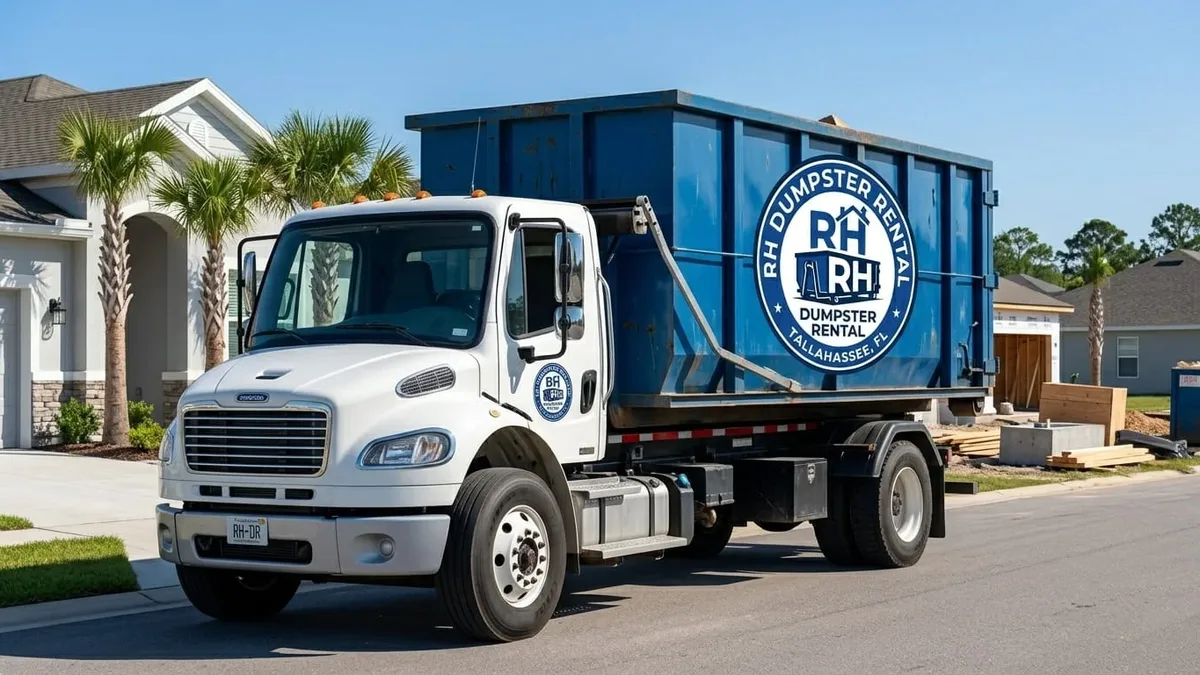
A roll-off dumpster is built for the bulk of what a project generates — furniture, construction debris, yard waste, general household junk. But a handful of common items don’t belong in a regular dumpster load at all, either because they’re hazardous, regulated, or handled through a dedicated recycling stream instead. Leon County Solid Waste Management runs the local infrastructure for most of these, and knowing where they go before your dumpster arrives saves a headache at pickup time. Here’s the rundown.
Batteries and Electronics: The Hazardous Waste Center
Leon County’s Hazardous Waste Center, at 7550 Apalachee Parkway, accepts household batteries and electronics free of charge. This isn’t just a courtesy program — for a specific category of battery, it’s state law. Florida Statute § 403.7192(3)(b) makes it illegal for anyone — residential, business, institutional, government, industrial, commercial, communications, or medical — to throw nickel-cadmium or small sealed lead-acid rechargeable batteries, or any product containing them, into the regular trash. They have to be recycled or taken to a permitted facility instead. Common household culprits include rechargeable power-tool batteries, some cordless-phone and camera batteries, and battery packs built into certain small appliances. The Hazardous Waste Center is the straightforward local answer, and it’s free.
Electronics are a little different legally — Florida doesn’t have a statewide ban on landfilling TVs, monitors, or general e-waste the way some states do, so we won’t claim otherwise. But it’s still good practice to recycle electronics rather than trash them, and the Hazardous Waste Center takes those too, free, right alongside batteries. If you’re clearing out an estate, an office, or old electronics during a remodel, that’s the drop-off point. For everything else that shouldn’t go in a dumpster, our what can and can’t go in a dumpster guide covers the full list.
Waste Tires: Not a Dumpster Item
Tires are not allowed in regular dumpster loads — ours or anyone else’s — because of how landfills handle (or can’t handle) whole tires. Leon County gives residents two free ways to get rid of them instead: the Solid Waste Management Facility accepts up to 4 tires per resident free of charge, and periodic Tire Amnesty Days allow up to 25 tires free for residents who’ve accumulated more than a handful (from a garage cleanout or a stash of old spares, for instance). If your project involves clearing out tires along with everything else, plan on a separate trip for those rather than tossing them in the container.
Large Appliances (“White Goods”)
Refrigerators, washers, dryers, water heaters, and similar large appliances — generally called “white goods” in the waste-management world — typically go through a separate bulk pickup process rather than regular trash or recycling in most municipal systems, largely because appliances with refrigerants (refrigerators, freezers, some air conditioners) need that refrigerant properly reclaimed before the unit can be scrapped. That said, if you’re working with us: ask when you book, because we can generally take appliances in a rented dumpster as part of a cleanout — it’s just worth flagging up front so we can plan for the extra weight and confirm it works for your specific load.
What This Means for Your Dumpster Rental
None of this is meant to complicate a straightforward cleanout or remodel — it’s a short list, and most projects only run into one or two of these items at most. The practical takeaway: set batteries and electronics aside for the Hazardous Waste Center, keep tires out of the load entirely and plan a separate drop-off, and ask us directly about large appliances rather than assuming either way. Everything else — furniture, drywall, flooring, yard waste, general construction debris — is exactly what a rented dumpster is built for.
Other Items That Don’t Belong in a Dumpster
Beyond batteries, tires, and white goods, the same general hazardous-materials list applies here as everywhere: paint that’s still wet, fuel and other chemicals, fluorescent bulbs and anything containing mercury, refrigerant-containing appliances (until reclaimed), medical or biohazard waste, asbestos, and propane tanks. If you’re not sure whether something on your list belongs in the dumpster or needs a separate stop, it’s always fine to ask when you book — better to sort it out ahead of time than have it flagged at pickup.
Questions Before You Book
If your project includes any of these items and you’re not sure how to handle them, call RH Dumpster Rental Tallahassee at (850) 900-8684. We’ll walk through what’s going in the container versus what needs a separate stop at the Hazardous Waste Center or the Solid Waste Management Facility, and get you sized and scheduled for the rest. See our full rundown of accepted and prohibited items on the what can go in a dumpster page.