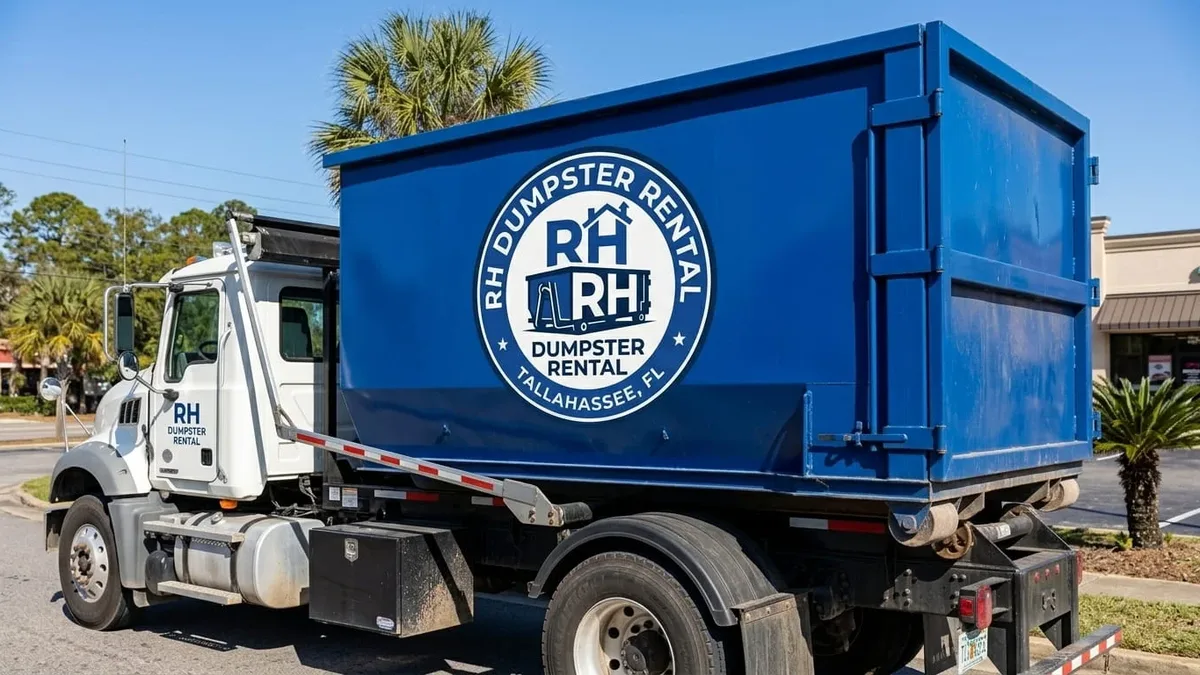
Most projects don’t run into a prohibited-item question at all — furniture, household junk, yard waste, and construction debris make up the bulk of what goes into our containers, and none of it needs special handling. But a handful of items genuinely don’t belong in a roll-off, either because Florida disposal law says so directly or because they’re unsafe to haul in an open container. Here’s the real picture, so you can plan ahead instead of guessing on delivery day.
What Typically Goes In Without a Second Thought
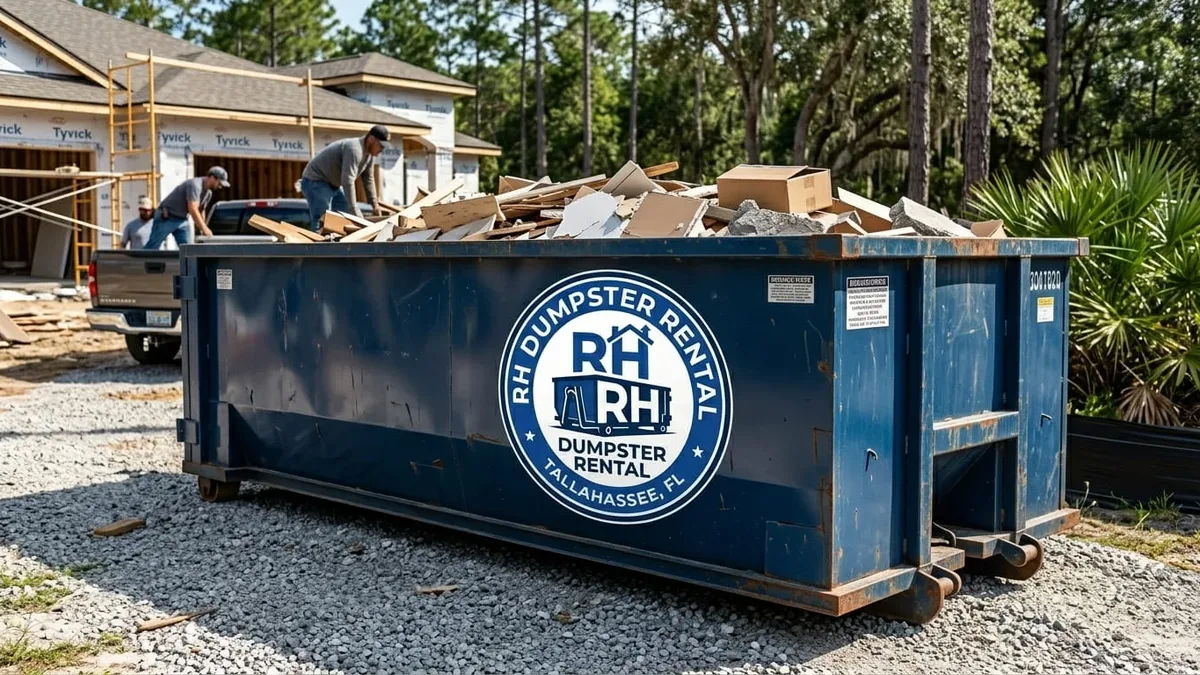
General household junk, old furniture, appliances, boxes of clutter from an estate clean-out, yard debris from a landscaping overhaul, and construction and demolition material from a remodel or tear-down all fill our containers every day across Tallahassee and Leon County. See our junk removal, yard waste, and demolition debris pages for the specifics of each. If you’re working a job site, our construction debris disposal guide covers sizing and what’s typically allowed in more detail.
Batteries: A Real, Citable Florida Statute
Florida law is specific and genuinely on the books here: Fla. Stat. § 403.7192(3)(b) makes it illegal for anyone — residential, business, institutional, government, industrial, commercial, communications, or medical — to discard nickel-cadmium or small sealed lead-acid rechargeable batteries, or products containing them, in the regular trash. These have to be recycled or taken to a permitted facility instead. Locally, the Leon County Hazardous Waste Center at 7550 Apalachee Parkway accepts batteries for free, so there’s no reason to route a load of dead batteries through a dumpster in the first place.
Electronics: No Statewide Ban, But Recycle Them Anyway
Unlike batteries, Florida doesn’t have a statewide law banning TVs, computers, or other electronics from ordinary disposal — so we won’t tell you a statute requires routing them elsewhere. That said, it’s still the right move: the Leon County Hazardous Waste Center accepts electronics for free alongside batteries, and recycling keeps the metals and components out of the landfill instead of buried with everything else. If a load includes old TVs, monitors, or computer equipment, mention it when you call and we can talk through the best way to handle it.
Tires: Not a Dumpster Item, But Free to Drop Off
Waste tires aren’t allowed in a regular dumpster load. Leon County makes this an easy fix, though — the Solid Waste Management Facility takes up to four tires per resident for free, and the county periodically runs Tire Amnesty Days that accept up to twenty-five tires at no charge. If a project turns up a stack of old tires, that’s the route to take rather than loading them into the container.
Large Appliances (“White Goods”)
Refrigerators, washers, dryers, and similar large appliances are generally handled as separate bulk pickup items in most municipal disposal programs rather than as a regular dumpster load. In practice, we can typically take appliances in a rented container — just mention what you’ve got when you call so we can plan for it. If a refrigerator or freezer is still holding refrigerant, that’s its own consideration (see below).
Standard Hazardous Materials: Always Off-Limits
A consistent list of items is never allowed in any of our containers, regardless of project size: hazardous waste and chemicals, paint that’s still wet (fully dried paint is generally fine), fluorescent bulbs and anything containing mercury, refrigerant-holding appliances that haven’t had the refrigerant reclaimed first, medical or biohazard waste, and propane tanks. Each of these needs its own proper disposal channel rather than an open roll-off — the Leon County Hazardous Waste Center is a good first call if you’re not sure where something belongs.
Asbestos: Never Permitted, No Exceptions
Asbestos is never allowed in any roll-off dumpster, anywhere in our service area. If a project involves suspected asbestos — old siding, floor tile, pipe insulation, or roofing material in an older home — it needs licensed abatement, not a dumpster. This is a hard line regardless of the size of the container or how the rest of the load is handled.
When You’re Not Sure: Ask Before You Toss It In
If you’re staring at a pile that includes old batteries, a stack of tires, or anything you suspect might be asbestos, the simplest move is to call us before loading day rather than after. We can tell you what belongs in the container and point you toward the right place for what doesn’t, so nothing gets flagged or refused once the load is already in. For anything related to a formal placement question — like whether your project needs a City or County permit — our Tallahassee dumpster permit guide covers that separately. Call RH Dumpster Rental Tallahassee at (850) 900-8684 with any questions about what’s allowed in your specific load.