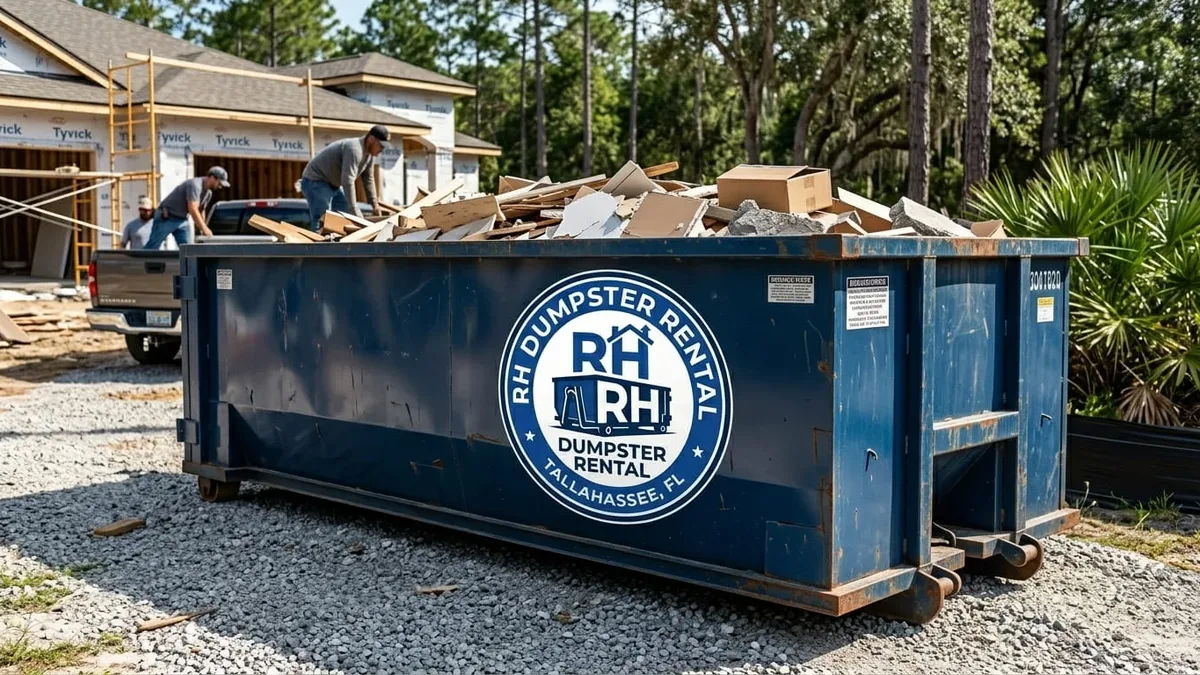
Whether you’re a contractor running a multi-week job or a homeowner tackling a DIY remodel, construction and demolition debris fills a dumpster differently than an ordinary household clean-out does. It’s heavier for its volume, it often shows up all at once as a crew tears through a phase of work, and getting the size right up front saves you from a mid-project swap. Here’s how we think about it.
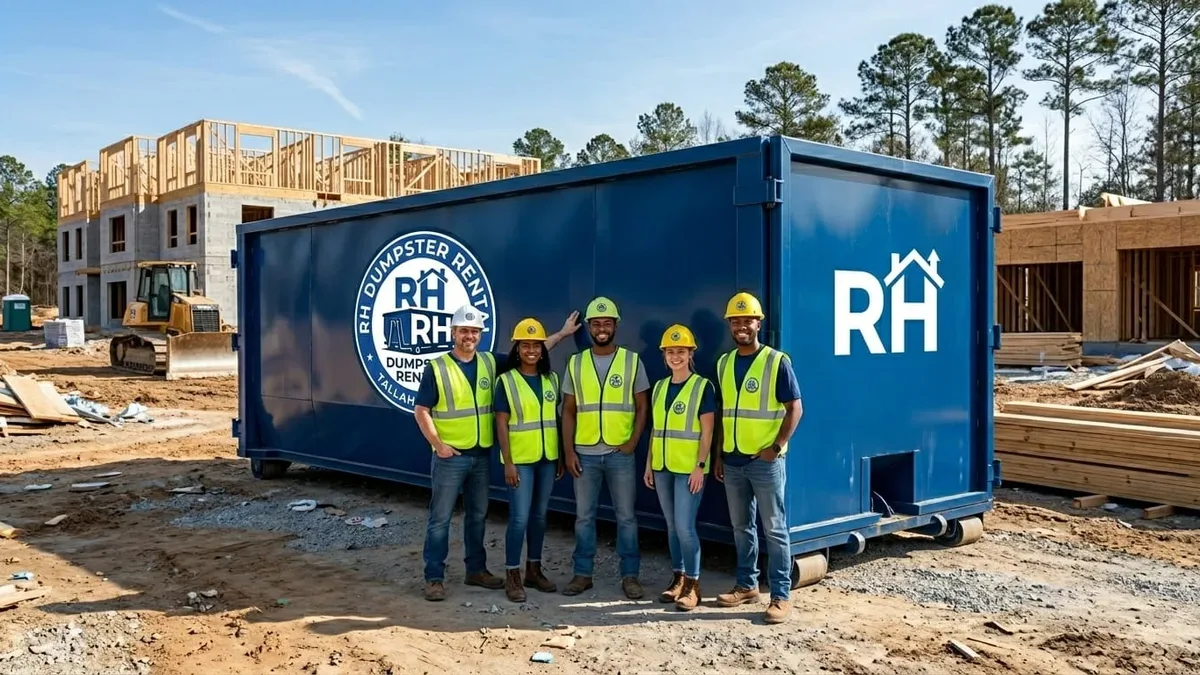
What’s Typically Allowed on a Construction Site Roll-Off
Most of what comes off a job site goes in without an issue: framing lumber, drywall, tile, flooring, cabinetry, fixtures, and general demolition material all fill our containers regularly. See our demolition debris page for general tear-down material, and our roofing dumpster rental page if shingles are part of the job. If you’re renovating a historic Tallahassee home, older fixtures, plaster, and lath tend to come out alongside the more standard materials — all of that is fine in a standard container too.
Sizing for Heavy Material: Why Weight Comes First
Concrete, brick, dirt, and masonry debris are dense enough that a container can hit its weight allowance long before it looks full. This trips up more construction projects than people expect — a load of broken concrete that only covers the floor of the container can already be at the weight limit, while the same box would have plenty of room left for lighter material like drywall or lumber. For a pure concrete, brick, or masonry load, a dedicated smaller container is often the right call even though it looks “too small” sitting empty on the driveway. Our concrete & heavy debris page covers how we size these loads specifically, and our general dumpster sizing guide walks through the weight-versus-volume trade-off in more detail.
What Doesn’t Go In
A few categories are off-limits on any job site dumpster. Asbestos is never permitted in a roll-off, no exceptions — older Tallahassee homes with suspected asbestos in siding, floor tile, or pipe insulation need licensed abatement instead. Paint that’s still wet, other chemicals, and rechargeable nickel-cadmium or small sealed lead-acid batteries also need proper disposal rather than going in the container — Florida law, Fla. Stat. § 403.7192(3)(b), specifically bars discarding those batteries in the regular trash. Our full guide to what can and can’t go in a dumpster in Florida covers the rest of the state’s disposal rules.
Choosing the Right Size for a Job Site
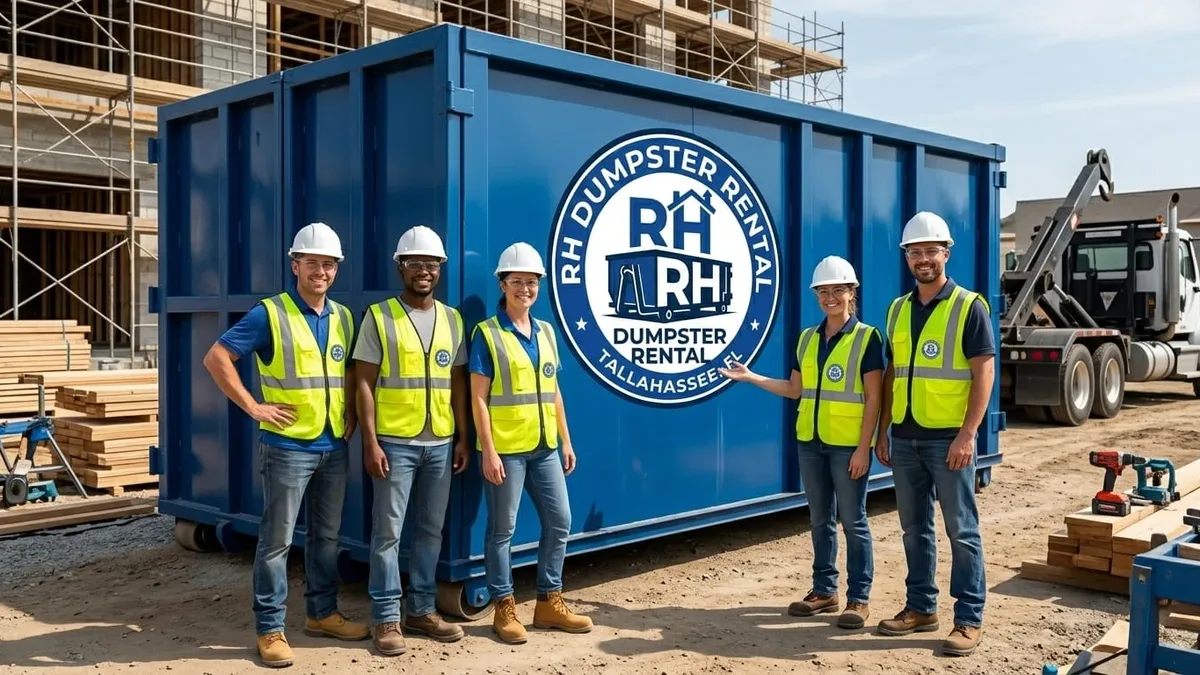
For a mixed load of lighter construction debris — drywall, lumber, flooring, packaging — our 30-yard and 40-yard dumpsters are the usual choice for a multi-week job, since they hold enough volume that a crew isn’t coordinating a swap mid-project. For dense, weight-heavy material like concrete or brick, a 10 or 15-yard often makes more sense once the weight allowance is factored in. If your project is a mix of both — framing debris plus a slab removal, say — it’s worth describing the full scope on the phone so we can recommend a size, or in some cases more than one container, that matches the actual job.
Protecting the Driveway and Placing the Container
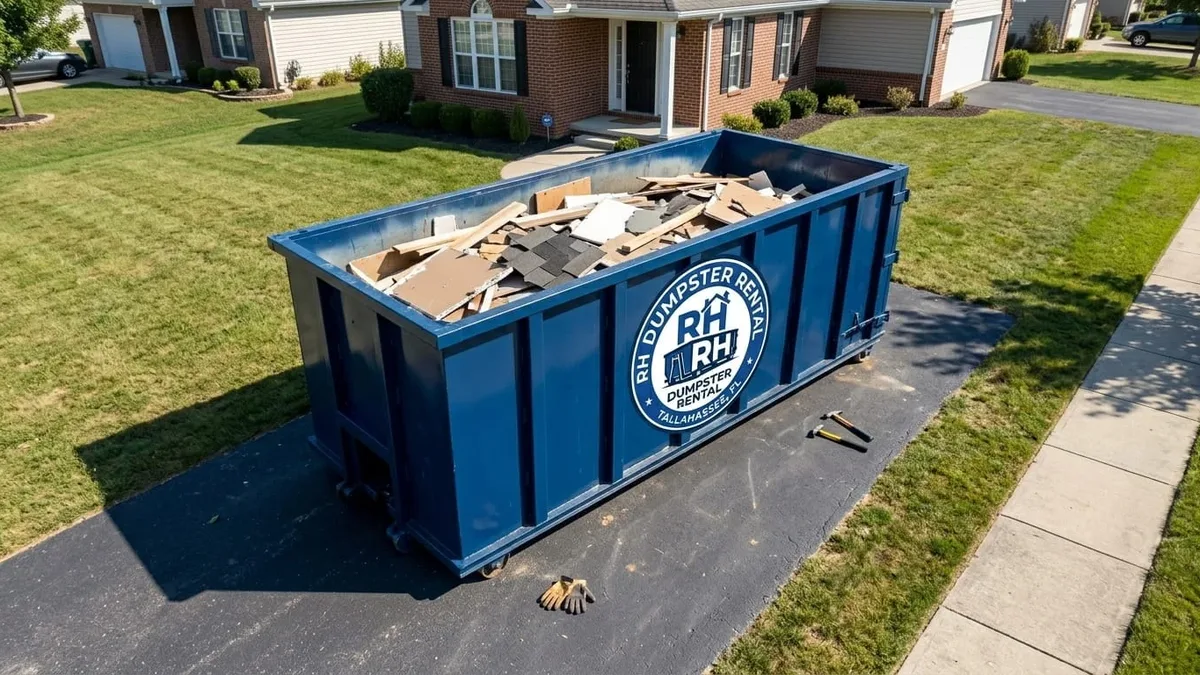
Most of our deliveries sit entirely on private property — a driveway, yard, or the lot itself — and placement there typically doesn’t require a permit. A few things help protect the surface underneath and keep placement smooth: clearing the drop spot of vehicles and low-hanging branches ahead of time, laying down plywood under the container’s support rails on pavers or older asphalt, and leaving enough clearance for our truck to maneuver in and out. If the driveway isn’t an option and the container needs to sit in the street or right-of-way instead, that’s a City of Tallahassee Traffic Engineering Section matter inside city limits, or a Leon County Public Works/Engineering Services matter in unincorporated areas — see our full Tallahassee dumpster permit guide for how that breaks down.
Scheduling Around Hurricane Season
Job sites across Tallahassee and Leon County can see schedule disruptions during hurricane season, roughly June through November, when wind and storm debris clean-up work spikes right alongside ordinary construction demand. If your project timeline runs through those months, it’s worth building some flexibility into your delivery schedule. Our hurricane season debris guide covers the seasonal pattern in more detail, including how storm clean-up debris tends to spike demand right after a bad storm.
Get a Quote for Your Job Site
Construction debris varies enough job to job that we quote every project by phone with a flat rate, rather than publishing a generic price online. Tell us the scope — what’s coming out, how heavy it leans, and how long you expect the container to sit — and we’ll recommend a size and give you a number on the call. Call RH Dumpster Rental Tallahassee at (850) 900-8684, or see our construction dumpster rental page for the full service.